
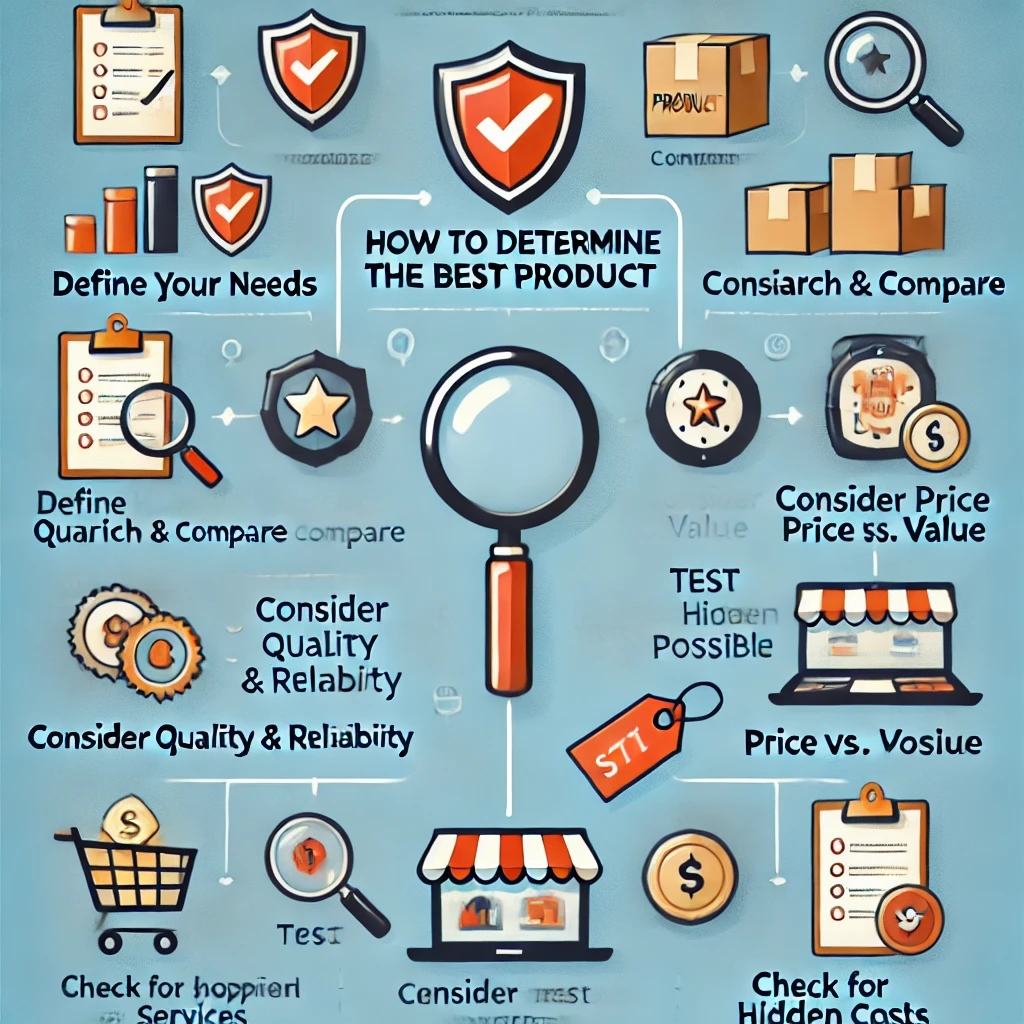
How can one determine which product is the best?
How can one determine which product is the best?
To know if a product is the best, follow these 7 key factors:
1. High Ratings & Reviews
- Look for consistent ⭐⭐⭐⭐⭐ (4+ stars) across multiple platforms.
- Read both positive & negative reviews to spot patterns in performance.
2. Best Features for the Price
- Compare with competitors—does it offer more value?
- Check if it has unique features or the latest technology.
3. Brand Reputation & Trust
- Well-known brands often ensure quality & reliability.
- Look for awards, certifications, or expert recommendations.
4. Durability & Performance
- Check if users say it lasts long and performs consistently.
- Materials & build quality matter—cheap materials = short lifespan.
5. Warranty & After-Sales Service
- A longer warranty often means the company trusts its product.
- Responsive customer support is a plus.
6. Value for Money
- Most expensive ≠ best. Find the best balance between quality & price.
- If a cheaper option performs the same, it’s the smarter buy.
7. Real-World Testing & Recommendations
- Watch YouTube reviews & comparisons.
- Ask friends, forums, or Reddit for real user experiences.
How to know that product is the best product?
Determining the best product depends on various factors, including personal needs, budget, and product quality. Here’s a structured approach to making the best choice:
1. Define Your Needs
- What problem are you trying to solve?
- What features are essential vs. optional?
- How often will you use the product?
2. Research & Compare
- Read Reviews: Check customer reviews on Amazon, Best Buy, or specialized forums.
- Expert Opinions: Look at ratings from trusted sources like Wirecutter, Consumer Reports, or YouTube reviewers.
- Compare Features: Create a side-by-side comparison of specifications, performance, and durability.
3. Consider Quality & Reliability
- Check brand reputation and reliability.
- Look at long-term durability vs. short-term affordability.
- See if the product has a warranty or good customer support.
4. Price vs. Value
- The most expensive option isn’t always the best.
- Look for a balance between price, features, and longevity.
- Consider second-hand or refurbished options for premium quality at a lower price.
5. Test If Possible
- Try it in-store or through a trial period if available.
- Look for return policies in case the product doesn’t meet expectations.
6. Check for Hidden Costs
- Are there additional accessories or subscriptions needed?
- What are the maintenance costs?
