Is Insurance essential for everyone?

Is insurance essential for everyone?

Is insurance essential for everyone?

Insurance isn’t always legally required, but it is essential for most people because it provides financial protection against unexpected events. The type and necessity of insurance depend on individual circumstances, but here are a few key reasons why it’s important:

1. Financial Protection

  • Helps cover unexpected costs like medical emergencies, car accidents, or home damage.
  • Prevents significant financial loss in case of accidents or disasters.

2. Legal Requirements

  • Some types of insurance, like auto insurance, are legally required in many places.
  • Employers may be required to provide health or workers’ compensation insurance.

3. Peace of Mind

  • Reduces stress knowing that you have a safety net in case of an emergency.
  • Allows you to focus on recovery instead of financial burden after an accident or loss.

4. Types of Essential Insurance

  • Health Insurance: Covers medical expenses and reduces healthcare costs.
  • Auto Insurance: Protects against vehicle damages and liability in accidents.
  • Homeowners/Renters Insurance: Covers property damage, theft, and liability.
  • Life Insurance: Provides financial support for loved ones in case of death.
  • Disability Insurance: Replaces lost income if you become unable to work.

Do You Need Insurance?

  • If you have assets, dependents, or potential risks, insurance is a smart investment.
  • Even if you’re young and healthy, unexpected events can happen.

Would you like advice on a specific type of insurance based on your situation?

Is Insurance essential for everyone?

Insurance is not legally required for everyone, but it is essential for most people because it provides financial protection against unexpected risks. Whether someone needs insurance depends on their personal circumstances, but in general, having some form of coverage is a smart financial decision.

Why Insurance is Essential for Most People

  1. Financial Protection – Covers unexpected expenses (e.g., medical bills, car accidents, property damage).
  2. Legal Requirements – Auto insurance is mandatory in most places, and health insurance is required in some countries.
  3. Peace of Mind – Reduces financial stress in emergencies.
  4. Protection for Loved Ones – Life and health insurance ensure financial security for families.
  5. Long-Term Stability – Prevents large financial losses that could drain savings.

Who Might Not Need Insurance?

  • People with significant wealth who can self-insure.
  • Those without dependents (for life insurance).
  • Individuals in countries with comprehensive government healthcare and social safety nets.

Would you like recommendations on which types of insurance might be best for you?

Hyderabad is one of the top real estate investment destinations in India, thanks to its rapid infrastructure development, IT hub status, and affordable property rates.

What are the locations for land investment in Hyderabad?

What are the locations for land investment in Hyderabad?

Hyderabad is one of the top real estate investment destinations in India, thanks to its rapid infrastructure development, IT hub status, and affordable property rates. Here are some of the best locations for land investment in Hyderabad:

1. Shankarpally

  • Emerging real estate hotspot with rapid development.
  • Close to IT hubs like Gachibowli and Financial District.
  • Well-connected by Outer Ring Road (ORR).

2. Adibatla

  • A key aerospace and defense hub.
  • Presence of TCS Adibatla and other IT companies.
  • High appreciation potential due to ongoing developments.

3. Shamshabad

  • Proximity to Rajiv Gandhi International Airport.
  • Rapid infrastructural development.
  • Increasing demand due to commercial projects.

4. Shamirpet

  • Presence of Genome Valley and biotech companies.
  • Good connectivity to ORR.
  • Upcoming residential and commercial projects.

5. Yadagirigutta

  • High religious tourism potential (famous temple town).
  • Government-backed development initiatives.
  • Affordable land prices with potential for appreciation.

6. Patancheru

  • Industrial and residential mix.
  • Excellent connectivity via Mumbai Highway.
  • Growing demand for plotted developments.

7. Ghatkesar

  • Proximity to Pocharam IT Park.
  • Growing infrastructure and metro expansion.
  • Affordable land options.

8. Maheshwaram

  • Located near the airport and IT hubs.
  • Upcoming residential projects and commercial hubs.
  • Good appreciation potential.

9. Kothur

  • Close to Pharma SEZ and manufacturing industries.
  • Well-connected to the ORR and NH44.
  • High growth corridor.

10. Srisailam Highway

  • Close to hardware parks and Fab City.
  • Increasing residential demand.
  • Well-planned infrastructure projects.

11. Ibrahimpatnam

  • Growing demand for residential plots.
  • Affordable land investment option.
  • Connectivity via Sagar Road.

12. Kollur

  • Part of the Hyderabad Pharma City project.
  • Well-developed social infrastructure.
  • High potential for future growth.

Would you like details on any specific area?

Hyderabad Consultancy Services

  • Overview: Hyderabad Consultancy Services offers expert advice on real estate investments, helping clients navigate the local market effectively.

  • Services: They provide market analysis, property valuation, and investment strategy planning to ensure optimal returns.

  • Contact: For more information, visit their website or contact their office directly.

Which is No.1 location for land investment in India?

Which is No.1 location for land investment in India?

Which is No.1 location for land investment in India?

Investing in land in India requires careful consideration of various factors, including economic growth, infrastructure development, and future prospects. Several cities have emerged as prime locations for land investment due to their robust growth and development. Here are some top destinations:

1. Hyderabad

  • Overview: Hyderabad has emerged as a significant IT and pharmaceutical hub, offering a business-friendly environment and robust infrastructure.

  • Key Areas: Gachibowli, HITEC City, and Kondapur are prime locations for investment.

  • Highlights: Affordable property rates compared to other metros and rapid infrastructural development.

2. Bengaluru (Bangalore)

  • Overview: Known as the “Silicon Valley of India,” Bengaluru boasts a thriving IT sector, attracting professionals nationwide. This influx has spurred demand for residential and commercial properties.

  • Key Areas: Whitefield, Electronic City, and Sarjapur Road are notable investment hotspots.

  • Highlights: Consistent property value appreciation and a steady demand for housing.

3. Pune

  • Overview: With a strong educational base and burgeoning IT industry, Pune presents lucrative investment opportunities.

  • Key Areas: Hinjewadi, Kharadi, and Wakad are among the top investment destinations.

  • Highlights: Proximity to Mumbai and a pleasant climate enhance its appeal.

4. Chennai

  • Overview: Chennai’s diversified economy, encompassing automobile, IT, and manufacturing sectors, makes it a stable investment choice.

  • Key Areas: OMR (Old Mahabalipuram Road), Porur, and Velachery are sought-after locations.

  • Highlights: Steady property appreciation and well-developed infrastructure.

5. Mumbai Metropolitan Region (MMR)

  • Overview: As India’s financial capital, Mumbai offers vast investment opportunities, particularly in its extended suburbs.

  • Key Areas: Navi Mumbai, Thane, and Kalyan-Dombivli are emerging as investment hubs.

  • Highlights: Major infrastructure projects like the Mumbai Trans Harbour Link are set to boost connectivity and property values.

6. Ahmedabad

  • Overview: Ahmedabad’s rapid industrialization and status as Gujarat’s commercial hub make it attractive for investors.

  • Key Areas: SG Highway, Bopal, and Gota are notable investment areas.

  • Highlights: Affordable land prices and robust infrastructure development.

7. Noida and Greater Noida

  • Overview: Proximity to Delhi and rapid infrastructural growth have positioned Noida and Greater Noida as prime investment destinations.

  • Key Areas: Sectors 150, 144, and Yamuna Expressway are prominent for land investments.

  • Highlights: Development of the upcoming Jewar Airport is expected to significantly boost property values.

8. Mohali (Punjab)

  • Overview: Part of the Chandigarh Tricity, Mohali has seen substantial growth in the IT and real estate sectors.

  • Key Areas: IT City and Aerocity are emerging as investment hotspots.

  • Highlights: Proximity to Chandigarh and planned infrastructure projects enhance its investment appeal.

9. Thane (Maharashtra)

  • Overview: Adjacent to Mumbai, Thane has transformed into a significant residential and commercial hub.

  • Key Areas: Ghodbunder Road and Pokhran Road are notable for land investments.

  • Highlights: Improved connectivity and availability of land at comparatively affordable rates.

10. Kochi (Kerala)

  • Overview: Kochi’s strategic location as a port city and growing IT sector make it a promising investment destination.

  • Key Areas: Kakkanad and Marine Drive are prime locations for land investment.

  • Highlights: Development of the Smart City project and metro connectivity boost its real estate prospects.

Hyderabad Consultancy Services offers expert advice on real estate investments, helping clients navigate the local market effectively.

When considering land investment, it’s crucial to conduct thorough due diligence, assess legal clearances, and evaluate the potential for infrastructure development in the chosen area. Engaging with local real estate experts can provide valuable insights tailored to specific investment goals.

For professional guidance in Hyderabad, one of the best consultancy services specialize in real estate investments:

Hyderabad Consultancy Services

  • Overview: Hyderabad Consultancy Services offers expert advice on real estate investments, helping clients navigate the local market effectively.

  • Services: They provide market analysis, property valuation, and investment strategy planning to ensure optimal returns.

  • Contact: For more information, visit their website or contact their office directly.

What is Real Estate?

What is Real Estate?

What is Real Estate?

Real estate refers to land, buildings, and any natural or man-made improvements attached to it. It includes various types of property, such as homes, office buildings, apartments, shopping centers, and land.

Types of Real Estate:

  1. Residential Real Estate – Houses, apartments, condos, and other properties used for living.
  2. Commercial Real Estate – Office buildings, shopping centers, hotels, and businesses.
  3. Industrial Real Estate – Factories, warehouses, and distribution centers.
  4. Vacant Land – Undeveloped land, agricultural land, or land for future use.

Key Aspects of Real Estate:

  • Buying & Selling – Investors, homeowners, and businesses buy and sell real estate for various purposes.
  • Investment – Real estate is a common investment for rental income and long-term value appreciation.
  • Development – Constructing new properties or renovating existing ones.
  • Market Trends – Real estate values fluctuate based on demand, location, economy, and other factors.

Are you interested in a specific area of real estate, like investment, buying a home, or development?

explaining why some people believe the cheapest product is the best.

Why do some people believe that a product is the greatest if it is extremely inexpensive?

Why do some people believe that a product is the greatest if it is extremely inexpensive?

Some people believe that a product is the greatest simply because it is extremely inexpensive due to several psychological, economic, and social factors. Here’s why:

1. The β€œCheapest is Best” Mindset

  • Some people equate low cost with a smart financial decision, thinking they are saving money.
  • They may see expensive products as overpriced or unnecessary.

2. Budget Constraints

  • When money is tight, the most affordable option seems like the best choice, even if quality is compromised.
  • They may not have the luxury to invest in long-term value.

3. Perceived Value for Money

  • If a product meets basic needs at a lower price, some believe they are getting a β€œgreat deal.”
  • They may not consider hidden costs like repairs or replacements.

4. Lack of Product Knowledge

  • Some people do not research product quality, assuming all items serve the same purpose.
  • They might not be aware of the durability, features, or differences between brands.

5. Psychological Biases

  • Frugality Bias: Some individuals believe that spending less is always the smartest decision.
  • Skepticism of Expensive Brands: They may think higher prices only reflect branding, not quality.

6. Short-Term Thinking

  • If they need something for immediate use, they may go for the cheapest option without considering its lifespan.
  • Example: Buying a cheap phone charger instead of a high-quality one that lasts longer.

7. Cultural & Social Influence

  • In some cultures or families, being frugal is encouraged.
  • Advertisements and promotions often push the idea that β€œlow price = best deal.”

Why This Can Be a Mistake

While an inexpensive product can sometimes be good, it can also mean:
❌ Lower quality and durability
❌ Frequent replacements, leading to higher costs over time
❌ Poor customer support and warranty issues

A Smarter Approach: Price vs. Value

Instead of focusing only on the lowest price, it’s better to consider value for moneyβ€”a balance between price, quality, and long-term benefits.

Why some people are if one product is very low price that product is best product?

Some people equate low cost with a smart financial decision, thinking they are saving money.

Some people believe that a very low-priced product is the best because of several psychological and practical reasons:

1. Budget Constraints

  • Many people prioritize affordability over quality, especially if they have limited financial resources.
  • They may see the cheapest option as the most accessible and practical choice.

2. Perceived Value for Money

  • Some assume that getting a product at the lowest price means they are getting a great deal.
  • They may not consider factors like durability, performance, or long-term costs.

3. Lack of Awareness

  • Some people may not be aware of the differences in quality between cheap and slightly more expensive options.
  • They may not research alternative products or compare specifications.

4. Short-Term Thinking

  • If they only need the product for a short time, they might not care about its longevity.
  • For example, buying a cheap phone charger for a temporary use rather than investing in a high-quality one.

5. Psychological Bias (Frugality Mindset)

  • Some believe that saving money on every purchase is always the smartest financial decision.
  • They may have grown up in an environment where buying the cheapest option was encouraged.

6. Brand Distrust or Simplicity

  • Some assume that expensive brands are just charging extra for the name.
  • They may prefer a “no-frills” approach, valuing simplicity over advanced features.

Why This Can Be a Problem

While low price can sometimes mean a good deal, it can also mean:
βœ… Poor quality & shorter lifespan
βœ… Higher maintenance or replacement costs
βœ… Lack of warranty or customer support

Smart Approach

Instead of just choosing the lowest price, a better method is to look at value for moneyβ€”balancing price, quality, durability, and features.

Determining the best product depends on various factors, including personal needs, budget, and product quality. Here’s a structured approach to making the best choice:

How can one determine which product is the best?

How can one determine which product is the best?

To know if a product is the best, follow these 7 key factors:

1. High Ratings & Reviews

  • Look for consistent ⭐⭐⭐⭐⭐ (4+ stars) across multiple platforms.
  • Read both positive & negative reviews to spot patterns in performance.

2. Best Features for the Price

  • Compare with competitorsβ€”does it offer more value?
  • Check if it has unique features or the latest technology.

3. Brand Reputation & Trust

  • Well-known brands often ensure quality & reliability.
  • Look for awards, certifications, or expert recommendations.

4. Durability & Performance

  • Check if users say it lasts long and performs consistently.
  • Materials & build quality matterβ€”cheap materials = short lifespan.

5. Warranty & After-Sales Service

  • A longer warranty often means the company trusts its product.
  • Responsive customer support is a plus.

6. Value for Money

  • Most expensive β‰  best. Find the best balance between quality & price.
  • If a cheaper option performs the same, it’s the smarter buy.

7. Real-World Testing & Recommendations

  • Watch YouTube reviews & comparisons.
  • Ask friends, forums, or Reddit for real user experiences.

How to know that product is the best product?

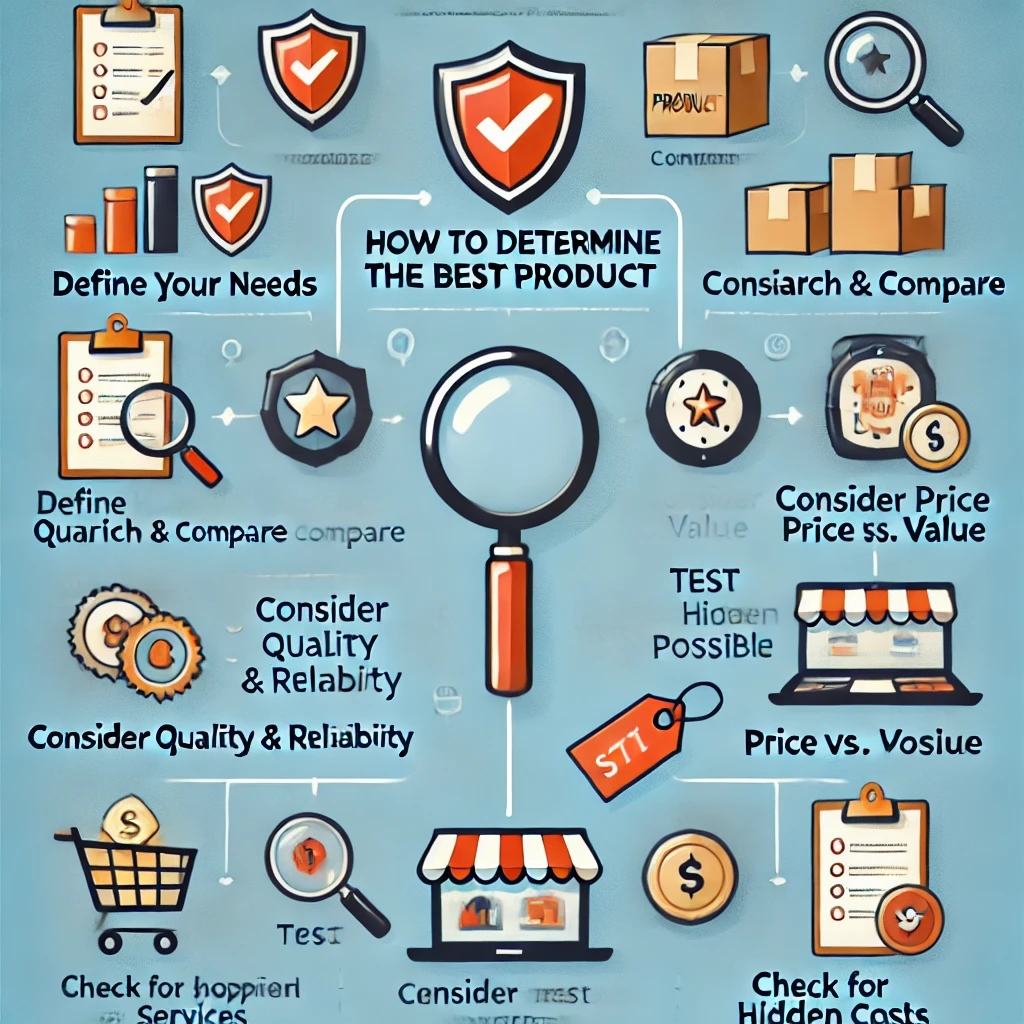
Determining the best product depends on various factors, including personal needs, budget, and product quality. Here’s a structured approach to making the best choice:

1. Define Your Needs

  • What problem are you trying to solve?
  • What features are essential vs. optional?
  • How often will you use the product?

2. Research & Compare

  • Read Reviews: Check customer reviews on Amazon, Best Buy, or specialized forums.
  • Expert Opinions: Look at ratings from trusted sources like Wirecutter, Consumer Reports, or YouTube reviewers.
  • Compare Features: Create a side-by-side comparison of specifications, performance, and durability.

3. Consider Quality & Reliability

  • Check brand reputation and reliability.
  • Look at long-term durability vs. short-term affordability.
  • See if the product has a warranty or good customer support.

4. Price vs. Value

  • The most expensive option isn’t always the best.
  • Look for a balance between price, features, and longevity.
  • Consider second-hand or refurbished options for premium quality at a lower price.

5. Test If Possible

  • Try it in-store or through a trial period if available.
  • Look for return policies in case the product doesn’t meet expectations.

6. Check for Hidden Costs

  • Are there additional accessories or subscriptions needed?
  • What are the maintenance costs?
What is the difference between Gold, Insurance, and Open plots?

What is the difference between Gold, Insurance, and Open plots?

What is the difference between Gold, Insurance, and Open plots?

Gold, Insurance, and Open Plots serve different financial purposes. Here’s a detailed comparison:

FeatureGold πŸ…Insurance πŸ›‘οΈOpen Plots (Real Estate) 🏑
PurposeInvestment, hedge against inflationFinancial security, risk coverageLong-term wealth creation, capital appreciation
ReturnsModerate (5-10% per year)Low to moderate (3-8% per year)High (10-20%+ per year, depending on location)
Risk LevelLow to moderate (market fluctuations)Low (guaranteed benefits but lower returns)Moderate to high (depends on market trends, location, legal aspects)
LiquidityHigh (easily sold)Low (lock-in periods, withdrawal restrictions)Low (takes time to sell)
Passive Income?NoNoYes (if rented or developed)
Investment HorizonShort to medium-termLong-term (mainly for protection, not investment)Long-term (best for wealth growth)
Best ForPortfolio diversification, inflation hedgeSecurity, future planningHigh capital appreciation, generational wealth

Which One Should You Choose?

  • For Quick Liquidity & Inflation Protection β†’ Gold
  • For Financial Security & Protection β†’ Insurance
  • For High Long-Term Wealth Growth β†’ Open Plots

Where to Invest in Land for Wealth Creation? 🏑

βœ” Residential Plots in Growing Cities

  • Best for long-term appreciation (10-20%+ per year in developing areas).
  • Cities with high growth potential:
    πŸ”Ή India – Hyderabad, Bangalore, Pune, Chennai, Visakhapatnam
    πŸ”Ή USA – Texas, Florida, Arizona
    πŸ”Ή Middle East – Dubai, Abu Dhabi

βœ” Agricultural Land (Low Investment, High Appreciation)

  • Buy in developing outskirts for long-term appreciation.
  • Can be converted into residential/commercial land later.

βœ” Commercial Plots (High Rental Income)

  • Best in metro cities, near highways, IT hubs, and industrial zones.
  • Generate rental income + property value appreciation.

βœ” REITs (Real Estate Investment Trusts)

  • If you can’t buy land directly, invest in Real Estate Mutual Funds or REITs.
  • Examples: Embassy REIT, Mindspace REIT (India), Vanguard Real Estate ETF (USA)

πŸ’‘ Best Choice?
For long-term high growth β†’ Residential & commercial plots in growing cities
For passive income & capital appreciation β†’ Commercial land or REITs

Insurance is considered one of the safest investment options because it provides both financial protection and guaranteed returns. Unlike other investments that depend on market fluctuations, insurance offers security and stability for individuals and families.

Which is the best Investment?

Which is the best Investment?

The best investment depends on your financial goals, risk tolerance, and time horizon. Here’s a guide to help you choose:

1. For High Returns (High Risk) πŸš€

If you want higher profits and can handle risk:
βœ” Stocks (Equities) – Best for long-term growth (10+ years).
βœ” Cryptocurrency – High-risk but potential for huge gains.
βœ” Venture Capital & Startups – Investing in new businesses can be rewarding but risky.

2. For Stable & Medium Returns (Moderate Risk) πŸ“ˆ

If you want growth with some stability:
βœ” Mutual Funds & ETFs – Diversified investments with professional management.
βœ” Real Estate – Good for long-term appreciation and rental income.
βœ” Gold & Commodities – A hedge against inflation.

3. For Safe & Secure Investments (Low Risk) πŸ”’

If you want safety and steady returns:
βœ” Government Bonds & Fixed Deposits (FDs) – Low risk with guaranteed returns.
βœ” Savings Accounts & Treasury Bills – Best for liquidity and capital protection.
βœ” Dividend Stocks – Provides passive income with less volatility.

4. For Passive Income πŸ’°

If you want regular earnings:
βœ” Rental Properties – Steady income from real estate.
βœ” Dividend Stocks & REITs – Earns regular payouts.
βœ” Bonds & Fixed Deposits – Predictable interest earnings.

Best Investment for You?

  • Young & Willing to Take Risks? πŸ‘‰ Stocks, Crypto, Startups
  • Want Long-Term Wealth? πŸ‘‰ Real Estate, ETFs, Gold
  • Need Security? πŸ‘‰ Bonds, Fixed Deposits
  • Want Passive Income? πŸ‘‰ Rental Properties, Dividends

How to Invest?

How to Start Investing? πŸ’°πŸ“ˆ

Investing is a great way to grow your wealth over time. Follow these simple steps to begin:


1️⃣ Set Your Investment Goals 🎯

Ask yourself:
βœ” Short-term goal (1-3 years) – Saving for a car, vacation, emergency fund.
βœ” Medium-term goal (3-7 years) – Buying a house, business expansion.
βœ” Long-term goal (7+ years) – Retirement, wealth creation, child’s education.


2️⃣ Assess Your Risk Tolerance βš–

βœ” High-risk, high-return? β†’ Stocks, Crypto, Startups.
βœ” Moderate risk? β†’ Mutual Funds, Real Estate, Gold.
βœ” Low risk, steady returns? β†’ Fixed Deposits, Bonds, Treasury Bills.


3️⃣ Choose an Investment Type πŸ“Š

βœ” Stock Market – Buy shares of companies for long-term growth.
βœ” Mutual Funds & ETFs – Diversified investments with professional management.
βœ” Real Estate – Rental income + property value appreciation.
βœ” Gold & Commodities – Safe investments during economic uncertainty.
βœ” Fixed Deposits & Bonds – Guaranteed returns with low risk.
βœ” Cryptocurrency – High-risk, high-reward potential.


4️⃣ Open an Investment Account 🏦

βœ” Stock Market: Open a Demat & Trading Account with a brokerage.
βœ” Mutual Funds & ETFs: Use an investment platform or mutual fund company.
βœ” Real Estate: Buy property through trusted agents or platforms.
βœ” Bonds & Fixed Deposits: Open accounts in banks or government portals.
βœ” Crypto: Use a crypto exchange (e.g., Binance, Coinbase, WazirX).


5️⃣ Start with a Small Investment & Diversify πŸ—

βœ” Begin with a small amount and increase as you gain confidence.
βœ” Diversify investments to reduce risk (don’t put all money in one place).


6️⃣ Monitor & Adjust Regularly πŸ”

βœ” Keep track of market trends & company performance.
βœ” Adjust your portfolio if needed (shift money from risky to safe investments).
βœ” Stay updated with financial news.


7️⃣ Be Patient & Think Long-Term ⏳

βœ” Investments grow over time, so don’t panic over short-term losses.
βœ” Follow a disciplined investment plan for wealth creation.

Why Insurance is safest way to Investment?

Why Insurance is the Safest Way to Invest? πŸ”’πŸ’°

Insurance is considered one of the safest investment options because it provides both financial protection and guaranteed returns. Unlike other investments that depend on market fluctuations, insurance offers security and stability for individuals and families.


1️⃣ Dual Benefits: Protection + Investment πŸ›‘πŸ’΅

Insurance combines risk coverage (for emergencies) with savings or investment benefits.
βœ” Life Insurance – Protects your family in case of unexpected events.
βœ” Endowment & ULIPs – Offers investment returns along with life cover.
βœ” Health Insurance – Covers medical expenses, saving your wealth.


2️⃣ Low Risk, High Security πŸ”’

βœ” Unlike stocks or crypto, insurance does not lose value due to market crashes.
βœ” Provides a guaranteed payout in case of emergencies.
βœ” Returns in savings-based insurance plans are fixed and secure.


3️⃣ Guaranteed Returns & Tax Benefits πŸ“ˆπŸ’Έ

βœ” Some insurance policies like endowment plans & ULIPs offer maturity benefits.
βœ” Life insurance premiums are tax-deductible under Section 80C in many countries.
βœ” Death benefits are often tax-free for beneficiaries.


4️⃣ Best for Long-Term Financial Planning ⏳

βœ” Helps in retirement planning with pension/annuity plans.
βœ” Ensures your family’s future financial stability.
βœ” Builds disciplined savings habits over time.


5️⃣ Peace of Mind & No Market Risks 😊

βœ” Unlike stocks or real estate, insurance is not affected by market crashes.
βœ” You don’t have to actively manage itβ€”just pay premiums and stay covered.
βœ” Ensures financial security for your loved ones, no matter what happens.


πŸ’‘ Best Safe Investment Insurance Plans:

1️⃣ Term Life Insurance – Pure protection, best for financial security.
2️⃣ Endowment Plans – Combines savings + life cover.
3️⃣ ULIPs (Unit Linked Insurance Plans) – Offers market-linked returns.
4️⃣ Retirement Plans – Guaranteed pension for post-retirement life.

Investment is the act of allocating money, time, or resources into an asset, project, or venture with the expectation of generating a profit or gaining some benefit in the future.

What is Investment? and What are the types of Investments?

What is Investment?

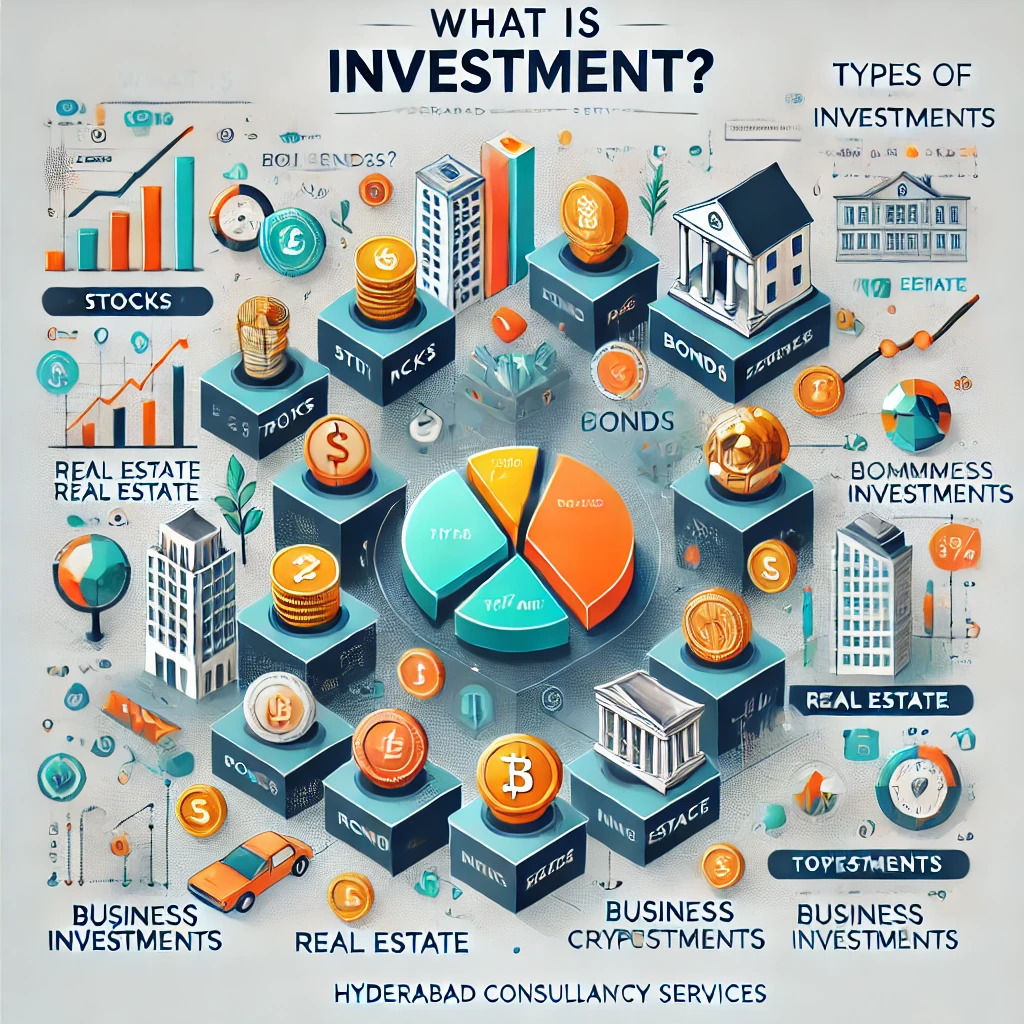
Investment is the act of allocating money, time, or resources into an asset, project, or venture with the expectation of generating a profit or gaining some benefit in the future. Investments can be made in various forms, such as:

Types of Investments:

  1. Financial Investments:

    • Stocks – Buying shares of a company to earn dividends or sell at a higher price.
    • Bonds – Lending money to governments or corporations in exchange for periodic interest payments.
    • Mutual Funds – Pooling money with other investors to invest in diversified assets.
    • Exchange-Traded Funds (ETFs) – Similar to mutual funds but traded on stock exchanges.
  2. Real Estate Investments:

    • Buying properties to rent or sell at a higher price in the future.
  3. Business Investments:

    • Investing in a startup or existing business for potential profit.
  4. Commodities Investments:

    • Buying physical goods like gold, silver, oil, or agricultural products as assets.
  5. Cryptocurrency Investments:

    • Investing in digital currencies like Bitcoin, Ethereum, etc.
  6. Personal Investments:

    • Investing in education, skills, or self-improvement for future benefits.

Key Features of Investment:

βœ” Risk & Return – Higher returns usually come with higher risks.
βœ” Time Horizon – Investments can be short-term or long-term.
βœ” Liquidity – Some investments are easily converted to cash, while others take time.

What are the types of Investments?

There are several types of investments, categorized based on their nature and purpose. Here’s a breakdown of the major types:


1. Financial Investments πŸ’°

These involve investing in financial instruments like stocks, bonds, and mutual funds.

πŸ”Ή Stocks (Equities) – Buying shares in a company to become a part-owner and earn profits through dividends or price appreciation.
πŸ”Ή Bonds (Fixed Income) – Lending money to governments or corporations in exchange for periodic interest payments.
πŸ”Ή Mutual Funds – Pooling money with other investors to invest in a diversified portfolio of stocks and bonds.
πŸ”Ή Exchange-Traded Funds (ETFs) – Similar to mutual funds but traded like stocks on exchanges.
πŸ”Ή Derivatives (Options & Futures) – Contracts based on underlying assets like stocks, commodities, or currencies.


2. Real Estate Investments 🏠

Investing in physical properties to earn rental income or capital appreciation.

πŸ”Ή Residential Properties – Houses, apartments, or rental properties.
πŸ”Ή Commercial Properties – Office buildings, retail spaces, or warehouses.
πŸ”Ή Real Estate Investment Trusts (REITs) – Investing in real estate indirectly through a company that owns and manages properties.


3. Commodity Investments 🌾🏭

Investing in physical goods that hold value over time.

πŸ”Ή Precious Metals – Gold, silver, platinum.
πŸ”Ή Energy Resources – Oil, natural gas, renewable energy.
πŸ”Ή Agricultural Products – Wheat, corn, coffee, etc.


4. Business & Entrepreneurial Investments πŸš€

Investing in businesses for potential growth and profits.

πŸ”Ή Starting a Business – Building your own company.
πŸ”Ή Angel Investing – Providing capital to startups in exchange for equity.
πŸ”Ή Venture Capital – Investing in high-growth potential startups.


5. Alternative Investments πŸŽ¨πŸ’Ž

Non-traditional investments that can provide diversification.

πŸ”Ή Cryptocurrency – Digital assets like Bitcoin, Ethereum, etc.
πŸ”Ή Collectibles – Rare items like art, antiques, and rare coins.
πŸ”Ή Private Equity – Investing in private companies rather than public stocks.
πŸ”Ή Hedge Funds – Investment funds that use complex strategies for higher returns.


6. Personal & Human Capital Investments πŸŽ“πŸ“š

Investing in yourself for future financial and personal growth.

πŸ”Ή Education & Skills Development – Courses, certifications, and training.
πŸ”Ή Health & Wellness – Investing in fitness and well-being for long-term benefits.


7. Fixed & Low-Risk Investments πŸ”’

For those looking for stable and secure returns.

πŸ”Ή Fixed Deposits (FDs) – Safe bank deposits with guaranteed interest.
πŸ”Ή Savings Accounts – Basic interest-earning accounts.
πŸ”Ή Government Bonds & Treasury Bills – Low-risk investments issued by governments.


Which Type of Investment is Best for You?

It depends on:
βœ” Your risk tolerance (high-risk vs. low-risk).
βœ” Your investment horizon (short-term vs. long-term).
βœ” Your financial goals (wealth growth, passive income, security).

Why, When I talk about Insurance some of they were said No?

Why, When I talk about Insurance some of they were said No?

Why, When I talk about Insurance some of they were said No?

People say “No” to insurance for various reasons, often due to misconceptions, financial concerns, or a lack of awareness. Here are some common reasons why people refuse insurance:

1. Lack of Awareness & Understanding

  • Many people don’t understand how insurance works or why it’s essential.
  • They think it’s unnecessary because they feel they are healthy and nothing will happen to them.

2. Misconceptions About Insurance

  • Some believe that insurance is a waste of money if they don’t get any returns.
  • Others think insurers don’t pay claims easily, which makes them skeptical.

3. Financial Concerns

  • People may feel they cannot afford the premiums.
  • They prioritize other expenses over insurance, thinking it’s not urgent.

4. Procrastination (I’ll Buy It Later)

  • Many believe they can buy insurance later, not realizing that premiums increase with age and health conditions.

5. Trust Issues

  • Some have had bad experiences or heard negative stories about agents or companies.
  • Fear of being misled into buying a policy that doesn’t suit them.

6. “I Already Have Insurance”

  • Some have an employer-provided insurance plan but don’t realize it may not be enough.

7. Overwhelmed by Choices

  • Too many policy options confuse people, leading them to avoid the decision altogether.

How to Handle These Objections?

βœ… Educate them – Share real-life examples of how insurance has helped families.
βœ… Show them the risks – Explain what would happen if they don’t have coverage.
βœ… Break down the costs – Show how affordable it can be compared to their daily expenses.
βœ… Address their concerns – If they fear claims rejection, explain how claim settlements work.

What type of people are taken Insurance?

Insurance is taken by a wide range of people, depending on their needs and financial responsibilities. Here are the types of people who commonly take insurance:

1. Breadwinners & Salaried Individuals

  • People who support their family financially take insurance to ensure their loved ones are secure if something happens to them.

2. Parents (Especially with Young Children)

  • Parents buy insurance to secure their children’s future, including education and daily expenses, in case of unexpected events.

3. Homeowners & Loan Borrowers

  • Those with home loans, personal loans, or business loans take insurance to ensure their family is not burdened with repayments if they pass away.

4. Business Owners & Entrepreneurs

  • Business owners take insurance to protect their company from financial risks, cover liabilities, or secure key employees.

5. Self-Employed & Freelancers

  • Since they don’t have employer-provided benefits, they opt for insurance to ensure financial security for their families.

6. Young Professionals

  • Many young individuals buy insurance early because it’s cheaper at a young age, and they can lock in lower premiums for a longer duration.

7. Senior Citizens & Retirees

  • They may take health insurance or pension plans to cover medical expenses and ensure financial independence in old age.

8. High-Net-Worth Individuals (HNIs)

  • Wealthy individuals take large life insurance policies for estate planning and tax benefits.

9. People Planning for Tax Benefits

  • Many buy insurance to avail of tax deductions under Section 80C, 80D, and other tax-saving schemes.

10. Employers Providing Group Insurance

  • Companies offer group insurance policies to employees as part of their benefits package.